
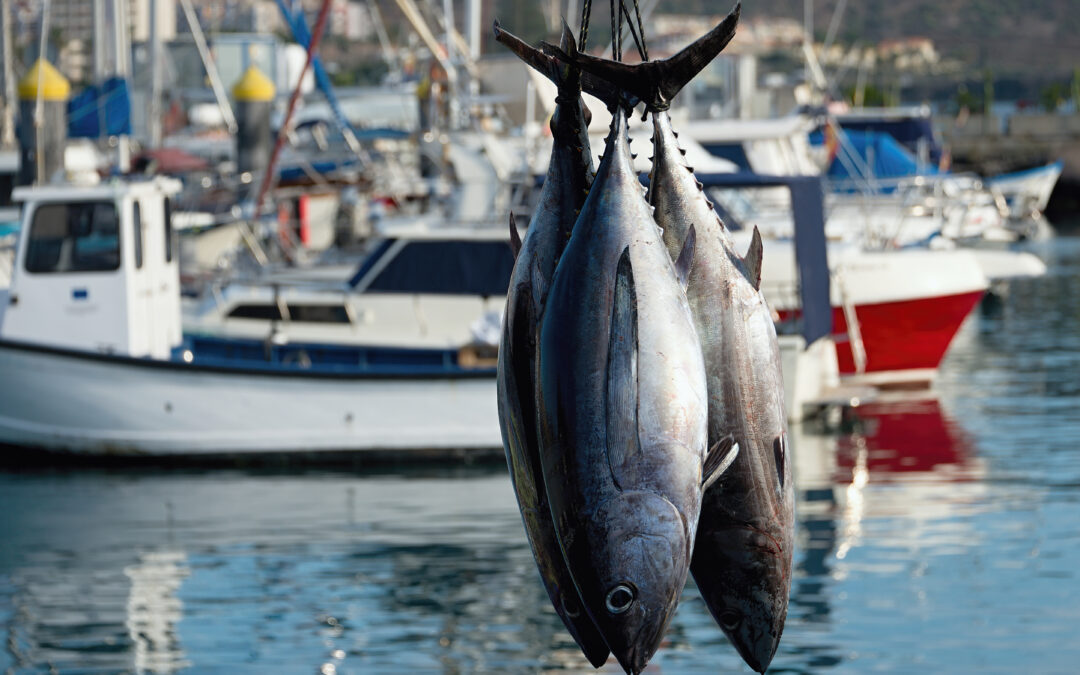
To the uninitiated, “tuna fishing” is a single, monolithic activity. You go out, you catch a tuna, you come home.
But for those of us who live and breathe the salt air on the East End of Long Island, we know that the Montauk tuna fishing season is actually a play in several acts. The ocean in June is a completely different world than the ocean in October. The water temperature changes, the bait profile shifts, and most importantly, the species of tuna patrolling our offshore grounds evolve.
Understanding these seasonal shifts is critical for any angler planning a charter. Are you looking for the brute strength of a giant Bluefin close to home? Or are you chasing the chaotic, pack-hunting frenzies of Yellowfin in the deep canyons?
At Moondance Charters, we specialize in putting you on the right fish at the right time. Here is your definitive guide to navigating the Montauk tuna season, from the first warmth of summer to the crisp glory of the fall run.
The Early Season: The Ghosts Arrive (June – July)
The Montauk tuna fishing season kicks off with a heavyweight contender: the Atlantic Bluefin Tuna.
Often referred to as “Ghosts” because of their ability to appear and disappear in an instant, Bluefin are the undisputed kings of the North Atlantic. They are massive, incredibly powerful, and—lucky for us—they are often the first to arrive.
Where We Find Them:
One of the distinct advantages of the early season is that you often don’t have to run to the canyons to find fish. Bluefin are tolerant of cooler water and will push surprisingly close to the Montauk coastline—sometimes within ten to twenty miles—chasing schools of sand eels and bunker.
The Fight:
Last season in June and July, we were catching 40-70 pound bluefin. Occasionally, we find bigger fish in the mix. The fight is thrilling. Bluefin fight differently than other tuna. They are stubborn. They will often sound deep and use their massive body surface area to plane against the water, forcing anglers into a vertical tug-of-war.
Techniques:
This is prime time for trolling. We use Penn 50 wides. Various color spreader bars, Joe’s chutes, and daisy chains. Trolling works at this time of the cycle because the fish are often feeding on smaller bait on the surface. At times we will see the bluefin working the surface, creating a commotion. That’s when we get out the popping rods, casting epoxy jigs, stickbaits and poppers right into busting schools. This is highly effective, but you must be able to cast. If you struggle with casting, we can instruct you until you get the hang of it. Once hooked up, hang on. This is mano a mano. You don’t have the power of a fifty wide. You are holding a spinning rod, specifically designed for this fight. But it will challenge you like you’ve never been challenged.
Stay tuned for the next installment Jigging and Popping. Running and Gunning.